

Technology Adaptation Program
SBDC- Technology Adaptation Program (TAP) Lead – Dr. Medhat Nasr (Scientist)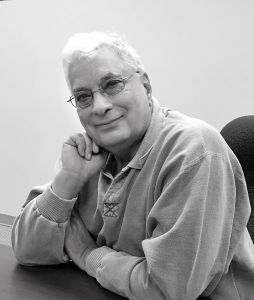
Dr. Medhat Nasr is a highly regarded apiculturist, educator and regulator with over 45 years of experience in both the public and the private sector. In Alberta, he served as Alberta Provincial Apiculturist from 2002-2019. During this period, he extended the regulatory-program to include applied bee research and extension activities. In 1994 he introduced and established the first “Bee Tech-Transfer program” in Ontario. He served as Ontario Beekeepers Tech_Transfer program lead from1994-2000. This program was the first in North America that was used as a vehicle to do applied research and directly transfer technology to beekeepers. He worked as Assistant Professor and Extension Apiculturist at Rutgers University, NJ, USA from 2000-2002.
Dr. Nasr expertise encompasses a wide diverse range of skills including bee pest management, beekeeping management, bee breeding, nutrition, bee diseases and pests, and technology development, adoption and transfer. His research program resulted in breeding tracheal mite resistant bees and developing effective application methods and registration of formic acid for tracheal and varroa mite control (i.e. MiteWipe, Mite_Away, and Mite_Away2), oxalic acid, HopGuard2 and Apivar® for Varroa treatment in Canada. Currently, his research is focused on developing new alternative miticides for Varroa control, managing miticides resistance, evaluation of integrated pest management (IPM) programs, and selection and breeding quality bee queens.
Medhat has passion for teaching. He has conducted many extension courses, training programs and workshops. He has given presentations at many conferences and meetings throughout Canada, United States, EU, Australia, New Zealand, Mexico, Japan, Ukraine and Argentina. Vd
He received numerous awards for his contributions to the apiculture field in Canada and the USA. In 2019 was awarded by the Canadian Honey Council “Willy Baumgartner Memorial Award” for outstanding contributions in improving the Canadian beekeeping industry. In 2018 he was awarded “Outstanding Service Award” by the Canadian Association of Professional Apiculturists (CAPA). He was awarded “Roger A Morse Teaching, Extension, Regulatory Award” by the Eastern Apiculture Society, USA in 2015 and he was also awarded “Fred Rathje Memorial Award” by the Canadian Honey Council in 2010. He also received several awards from Alberta Agriculture and Forestry for carrying successful projects for serving the beekeeping industry in Alberta. Dr. Nasr was awarded a life membership in several beekeeping associations across Canada and USA. Most recently, Dr. Nasr served as “President of the Canadian Association of Professional Apiculturists (CAPA)” from 2013 to 2017. Currently, he is a member of the executives of CAPA,
Dr. Nasr graduated from Cairo University, Giza, Egypt with B. Sc. and M. Sc. degrees in Entomology. He earned a Ph. D. degree in Entomology from University of California, Davis, USA.
SBDC Technical Adaptation Program (TAP) Honey Bee Research Assistant
Emilio Enrique Tellarini Prieto, MSc, Agricultural Engineer
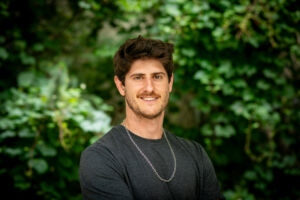 I was born in Bahía Blanca, a city of a similar size to Saskatoon. It is located in the province of Buenos Aires, about 600 kilometres south of the federal capital of Argentina, Buenos Aires. Argentina, and especially the province where I was born, is known for its agricultural production, including crops, livestock and, of course, beekeeping. In some ways, it is similar to Saskatchewan, but it has a greater diversity of crops due to its milder to warmer climate.
I earned my bachelor’s degree in Agricultural Engineering at the National University of the South in Bahía Blanca.
Once I had graduated, I encountered bees for the first time. I then worked for nearly two years at CAP, a company dedicated to beekeeping research and the production of treatments and supplements for honey bees. The company placed great value on sustainability, engagement with beekeepers and communicating knowledge. Thanks to this, I was able to gain a broader perspective and understand beekeeper’s reality. I also was able to give several technical presentations both within the country and abroad.
From 2023 to August 2025, I completed a master’s degree at the Honey Bee Health Lab under the supervision of Dr Sarah Wood in the Department of Veterinary Pathology at the Western College of Veterinary Medicine (WCVM), University of Saskatchewan. During the first part of the programme, I studied the effects of high dose vaporized oxalic acid on honey bees and queens, resulting in the publication of my first paper. I then focused on the interaction between agriculture and pollinator health, particularly honey bee nutrition, pesticide exposure and wild bee diversity in canola-dominated landscapes in the Canadian Prairies.
In June 2025, I had the great opportunity and pleasure of joining the TAP team, led by Medhat Nasr, as a research assistant. Now that my first season has ended, I am extremely excited about the work we have been doing and the new projects we have in the pipeline. I hope to rise to the occasion and contribute as much as possible.
Finally, I would like to take this opportunity to thank CAP for introducing me to the world of bees and igniting my passion; SBDC, its board members and Medhat for trusting me with this position; Sarah Wood and Elemir Simko for their exceptional guidance during my master’s program; all the lab members whom I met during the program; Will Stafford who taught me and gave me lots of advice; and everyone who has made Saskatchewan my new home.
SBDC – Technology Adaptation Program (TAP) – Research Assistants:
| Francis Ukanna Idam, B.Sc., Diploma in Agriculture
|
 A MITACS Intern at the Saskatchewan Beekeepers Development Commission. He is originally from Ebonyi State in eastern Nigeria. Her holds a Bachelor of Science in Education (Psychology, Guidance and Counselling), from the University of Port-Harcourt Nigeria, a Continuing Care Assistant Certificate, and a Diploma in Agriculture and Food Production, from Saskatchewan Polytechnic. Francis brings a multidisciplinary approach to service, combining agricultural research, and community leadership. At SBDC, he assists with research projects that support honey bee health, and he is actively working towards expanding his own apiary into a commercial operation in the future through mentorship and hands-on learning
 Jorja Larson
– supporting staff assisting with projects to improve bee health and sustainability during the bee season while attending University.