

Spotlight on Saskatchewan Beekeepers
Here is the first edition of “Spotlight on Saskatchewan Beekeepers” and we would like to thank Carrisa Schmidt – GC Honey Bees for taking the time to help us kick off this project!
GC Honey Bees – Grant Carissa Schmidt
Smeaton, Saskatchewan
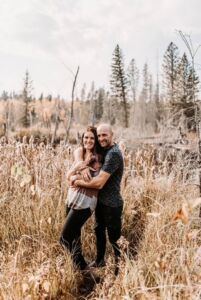
SBDC: Why did you become a beekeeper?
GC Honey Bees: I started in High School working at a local bee farm. I enjoyed the work and loved inspecting and going through the hives in the spring.
SBDC: Who inspired / influenced you to become a beekeeper?
GC Honey Bees: Bob Knox was the one who trained me and I really enjoyed working under him. I would have to say he was the one who most influenced me in my career.
SBDC: What has given you the most success over the years as a beekeeper?
GC Honey Bees: Being hands on every step of the way with my business has ensured the most success. Also keeping on top of treatment is huge to ensure the health of the hive.
SBDC: What changes have you seen in beekeeping since you first started until now?
GC Honey Bees: Main change I have seen is in the treatment for mites. We only had to treat once every spring and now we have to try multiple different treatments throughout the year just to keep them alive. This is a huge cost and a lot of extra time and stress. Second change would be the ever increasing costs for supplies to run a bee farm. With the exception of the last couple of years the price really has not changed that much. The third change would be the amount of time the crops are yielding. With everything being genetically modified now the crops yield for a much shorter time compared to 30 years ago, which results in a shorter honey flow. Fourth change would be the difficulty in finding reliable seasonal employees, which is why most beekeepers have to hire foreign workers.
SBDC: If you can pass any nugget of information to the next generation of beekeepers, what would it be?
GC Honey Bees: One would be to make sure they have the adequate training regarding mites and know how to treat them properly. Second would be to try not to lose the vision and passion that made you get into beekeeping with all the rising costs of inflation and the constant stress to stay on top of the over growing mite populations.
Pedersen Apiaries
Cutknife, Saskatchewan
I’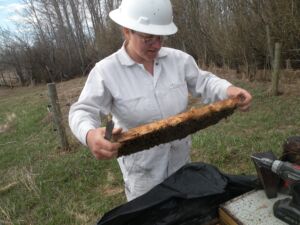 m Karen Pedersen. I’ve been beekeeping officially for around 30 years, but like most beekeepers’ children, I actually started hanging out with the hives while I was in diapers and started in the honeyhouse over 40 years ago. I’m a 5th generation beekeeper that we can trace, though most of the beekeepers in that lineage were hobbyists. It was just the last generation of Gil, John and Ed Pedersen that were commercial beekeepers. They really influenced my beekeeping because I was still young when they realized that overwintering singles worked better for them and wrote about it. I remember listening to calls where I could tell the other person on the line was telling them it couldn’t be done and they would just reply, “We’ll keep doing it.” Therefore, I love observing and learning from the bees. It’s why I like raising queens and working in the mini mating nucs. It’s a challenge to see how I change their behaviour through breeding. The mating nucs, which are just tiny hives, amplify problems and behaviours so that they are easier to identify and teach me so much more than the full-sized hives.
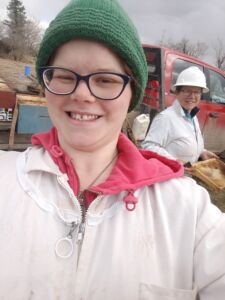 My most rewarding part of beekeeping has actually been becoming a mother. I’ve known about Shayla since before she was born, but I met her for the first time at her fathers wedding in July of 2016. At the wedding, he was looking for potential jobs for her. My crew was full, but I told him if she wanted to learn about bees, I would teach her and provide room and board. A few weeks later, Shayla showed up at my door. She was eager to help and learn from the beginning. We offered her an actual paid job within 4 days. After that, Shayla tested me hard to see if my offer was authentic. I am a woman of faith and in my prayers, I knew the Lord was telling me to offer her a place to live. My words were, “I’m not qualified.” The Lord’s response was, “Don’t worry, I am.” So, within the week I had offered that she could stay with me for as long as she liked. It has been the greatest blessing of my life.
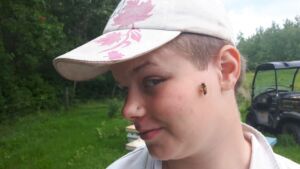 Hi I’m Shayla Lynne Dyck. I grew up in Burnaby, BC with my mother and I spent my summers with my father in Lucky Lake, SK. In 2016, I came to visit Karen because I thought it would be cool to learn about bees. Little did I know that this decision would change the trajectory of my life. In my teen years, I struggled with school, anxiety and my mental health. I was 9 when I started self-harming (cutting myself). It was my method of emotional management. In 2016, I was 19 and still struggling with these issues. Bees seemed interesting. I don’t know why, but I would say they chose me rather than I chose them.
Karen started teaching me about how the bees work right away. The intricacies of beekeeping fascinated me from the beginning and the physical demands of the job kept me engaged. I had to be on a regular schedule of eating and sleeping to get the work done. The bees taught me the hard way that they would react to my emotions. I could trigger their reactions almost instantaneously. If I was anxious, angry, frustrated, or stressed out, the bees would become defensive and start to run on the combs. I would have to step back, and calm myself down. The difference was night and day. The bees were so much more effective at teaching me to regulate my emotions than a parent or a teacher ever could be.
One of my most asked questions to fellow beekeepers was, “How many times do you get stung?” Nobody could answer the question. I was determined to answer it. I kept track for the first 3 years with a total of 365. (115 – 2016, 112 – 2017, 138 – 2018) I was told that when I was a “real beekeeper” I would no longer be able to keep track. I lost count after 3 years.
I continued to cut into the middle of 2017. We made many trips to the emergency room for stitches and Karen would dress them up with a mixture of propolis and honey to ward off infection. I could feel it sucking out the infection every time. I also want to start a process of bee-sting therapy because I think it might help with some of my chronic health issues, but we haven’t quite got that figured out yet.
I’ve never regretted my decision to learn about bees. If I were to encourage someone who wants to be a beekeeper this is what I would say: Focus on knowledge first – do as much research and planning before you get bees and make sure you find a mentor close by and listen to them. Don’t forget to start small, have patience with yourself and with the bees and remember you should only stop learning when you are dead. Fear will be your greatest hurdle. Face it head on and work through it. You will never regret it.
Genereux Honey
Broderick, Saskatchewan
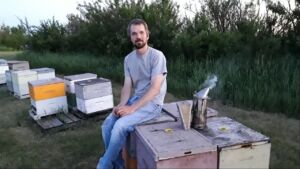 SBDC: Tell the millions (well hundreds) of readers who you are?
Lee & Judy Genereux, and our daughter Ruth. We keep a small commercial operation near Broderick Saskatchewan. My grandfather had bees in the 30’s and dad had bees in 70’s. Dad quit before I was born when packages jumped from $7 to $15, so I didn’t know any family as beekeepers before I started.
The irrigation district is a unique area for beekeeping. Well sheltered yards are difficult to find, our temperatures are generally warmer, and we have less moisture than most beekeeping areas in the province. Irrigated alfalfa fields are cut as soon as there is any evidence of bloom, multiple times until the end of the season. Despite the challenges, the irrigation keeps canola blooming during less than ideal conditions, we often have warmer temperatures for the spring build up period, great foraging weather for the main flow, most of my yards have water access with the canal system, and seed canola pollination is right out my back door.
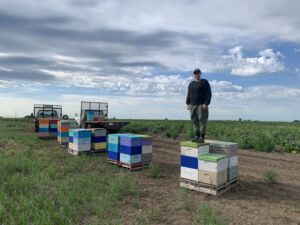 SBDC: How long have you been beekeeping?
Genereux: I started in 1999. Judy started in 2019. I started with 1 hive, and that slowly got out hand. In 2024 we sent 800 colonies to seed canola pollination.
SBDC: Is beekeeping the only thing you do or do have other jobs? And if you have other jobs, what do you both do?
We are both part-time teachers in our local school division as well. Beekeeping is the main profession. I have served on the executive of the Saskatoon Bee Club for many years, as vice-president and president.
SBDC: What got you into beekeeping?
Genereux: My neighbor Fred Baran figured I should give it a try, so I did.
SBDC: Who has been the biggest inspiration and cheerleader over your beekeeping career?
Genereux: In our beekeeping community it’s hard to call out individuals on this without missing someone. I have learned many tips and tricks from many conversations at meetings, auctions, visits to other operations and phone calls over the years. My parents have provided a lot of support over the years.
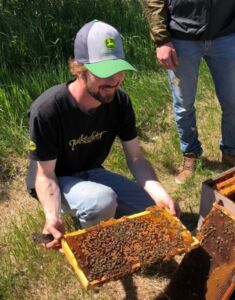 SBDC: What benefits do you see from being a part of the “bee community” and the SBDC?
Genereux: The connections we make as Saskatchewan beekeepers. We are all going through similar challenges in our operations, and it is important to have a unified body to tackle these challenges. The research towards bee health will also provide strong returns to the health of our bees.
SBDC: What do you think your greatest triumph has been from day one to current?
Genereux: Not getting the shovel!
SBDC: If you could offer any advice to someone looking to start beekeeping, what would you tell them?
Genereux: Join your local bee club or association. The connections you build there are essential for your success. We are a small community with a common passion for bees, and it’s essential to be a part of that community. We all have challenges in beekeeping, and sharing those challenges (and possible solutions) has saved a lot of beekeepers from disasters.
Sample and keep your mites under control. Learn to raise queens and nucs early on.
Take the course. Listen to your neighboring beekeepers. They have gone through the challenges you will go through. Use standard equipment and buy good quality frames.
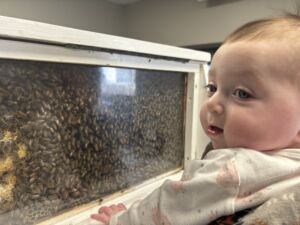 In my time as a beekeeping, a lot has changed and presented challenges. Since I started, I have dealt with varroa moving in (then Apistan resistance, then amitraz resistance), tracheal mite, an AFB outbreak and Nosema. These challenges certainly make it a lot harder to keep bees alive and thriving, but they also make us better beekeepers. Originally honey production was my goal, but have recently moved into pollination, and I’m hoping to add extra nuc production and sales in the coming years.
We are proud producers of Beemaid honey with Alberta Honey Producers Coop
Will Stafford
Forest Fringe Orchards
Prince Albert, Saskatchewan
 Tell us a little bit about you.
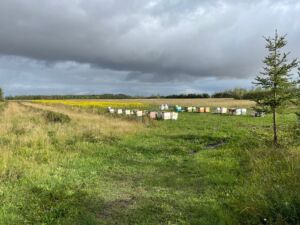
Will Stafford, we have a honey business and store front along high 55 east running 50-125 hives with full extraction Quonset facility
Operating Name: Forest Fringe Orchards
Location: https://maps.app.goo.gl/rW41Vme6C5LyLx2U7
32 km North along highway 55 from the PA bridge and 5 km south of Meath Park, SK. Right Side Blue Store building
 What got you into beekeeping?
Historically, we used to run a U-Pick at the start and we grew into a large Berry Orchard which grew into a winery to utilize our berry production. We closed the winery component of the operations in January of 2026.
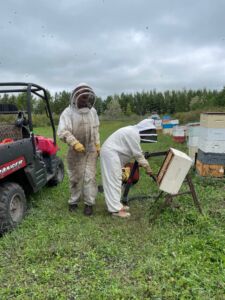
I got into beekeeping 15-18 years ago (4-6 hives) as away to boost berry production by having more pollinators for strawberries, raspberries (bees love raspberries). Antidotally, we did see a more consistent crop of raspberries which continues today. My mentor was Van Sorenson from Saskatoon (Now Retired living the good life). He and I were part of the Saskatchewan Fruit Growers Association.
I discovered that bees were more fun and per hour of my labour produced more income at a wholesale level and even bigger return at the store front.
If I had been exposed to bees at University of G in the mid 80’s I would have changed my major to apiculture from agriculture but I just never saw any posting or bee days at UofG that I remember.
As a main source of income, I do consulting in GIS / IT for clients across North America. I was stationed in Calgary Oil and Gas for several years due to the good economics and the farm bee keeping schedule worked well for slight expansion to 20-30 hives for several years.
Post Covid, my clients sent me home in 2022 and from there I have expanded to the 75-120 hives since I was home 24/7 and could really start to grow and monitor the hives after consulting hours.
 The expansion in beekeeping occurred as the fruit acres declined and wine production ceased. The beekeeping component was designed as a one person job with help from the kids during harvest or equipment building.
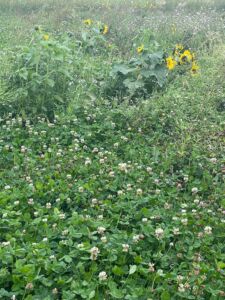
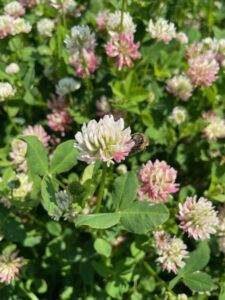 During this time, I was watching and learning more about beekeeping via YouTube (Manitoba Beekeeper and many more all advocating nutrition) and the idea of good bee nutrition took hold. Since I own the quarter section of land we live on, I started planting pollinators by the acre and the health of the hives has since improved as did production per hive. The pollinator blocks have grown to 20 rotating acres as orchards were removed and converted to pollinators. Kattle Squared Services is my source for pollinators (www.kattlesquared.com) from Birch Hills, SK. I tend to average $2,000 in seed costs every year, Sunflowers, Annual Pollinator, Perennial Pollinator, Clover, Alfalfa, etc. I believe economically it’s a break even on cost and return wrt extra production and hive health even when I tack in my labour and equipment costs to put it in and maintain it. A side benefit of the Clover and Sunflowers is they attract deer and moose to the property in the winter. By spring all that is left standing is sunflower stocks, the heads are completely eaten.
Another beekeeper that helped with questions and guidance is Otto Boettcher (now retired). I purchased several pallets of equipment from him as he retired which allowed me to get to my goal of 75-125 hives range quickly. That range is ideal for a person who lives 200m from the hives and has weekends and after-work hours to monitor and do work. The extra production from the expansion was sold wholesale and while some was converted into mead and melomel (Mead, Mint Mead and Cherry Honey Wine).
The income from the honey business is targeted towards the kid’s university education fund which normally covers off tuition and some living expenses. When they are home, I get them to focus of building maintenance and field work. In 2025 we converted 120 acres to a premium alfalfa clover mix for honey production. Historically, of the eight quarters around me 3-4 are in canola every year so adding the clover and alfalfa has reduced the crystallization of honey in the hive over winter. I am seeing less granulated honey in spring inspections. In the 2025 extraction I only scrapped 3-4 boxes of frames that had crystalized and a lot of those were from years prior that I had missed.
What has kept you in beekeeping for so long?
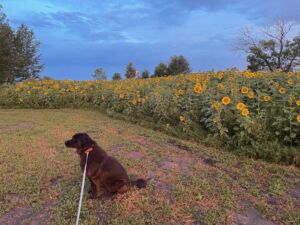
It ’s fun and you never know what you find when you open a hive, it’s like Christmas with every lid lift. Spring is the most exciting since I find out if I did better than average or worse than average wrt winter losses. I can say that since adding 3-5 now 20 acres of pollinators (7 years ago) the winter losses are less i.e. <=20%. Prior years it was a high as 40-50% very disappointing. Walking the hives with the dog at the end of a stressful consulting day is worth every penny of economic investment since it means I can destress and plan the next days consulting tasks mentally while watching the bees fly in and out and checking hives
 If you can pass on any advice to young beekeepers, what would it be?
Nutrition matters therefore having a diverse ecosystem of food for the hive I feel is worth the economic cost of putting it in and maintaining. It does not hurt you mentally to have a blooming wildflower field visible from the window for peace of mind. The payoff is walking into the pollinator blocks and hearing that buzz/drone of active foragers, you know right then you are doing something right. Its further reinforced when walking along the gravel roads and that buzz/drone is there but very faint.
Going back to Graham Parsons talks on pollinators we have significant planting of Buffalo Berry (Shepherdia argentea) in the tree lines and every spring they are alive with bees when it blooms for 2 weeks quite the sight and sound.
Call or email me if you are interested in visiting or have questions.
Will Stafford 403 630 2091
Stafford.will@sasktel.net
NOTE: The Business/Facilities are for sale, i.e. Beekeeping and all structures at:
https://maps.app.goo.gl/eoAHaVK47Mz2dBhS8
It could become several businesses, mechanic, small manufacturing, container greenhouse, etc., given the structures and power at site.
If someone is interested, please email us or call us.